
AI’s Influence on Higher Education-Friend or Foe?
- victoriabhucke
- Feb 17
- 2 min read
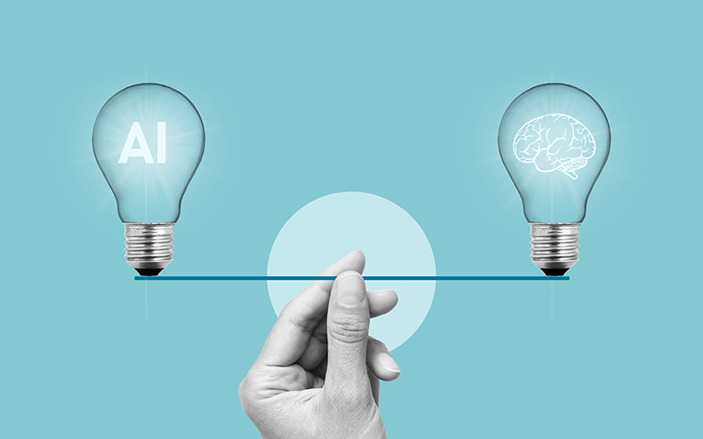
As in so many areas of today's world, Artificial intelligence (AI) is rapidly impacting higher education, and students are experiencing both the benefits and challenges of this emerging technology. From personalized learning tools to concerns about academic integrity, AI presents both opportunities and risks.
How AI Supports Student Learning
AI tools provide personalized learning experiences that adapt to students’ strengths and learning styles. Many students use AI for academic support, brainstorming, summarizing readings, outlining essays, and preparing for exams. When a student provides all the information, or a tailored prompt with their own thoughts and description of their situation, the tool provides support tailored to their individual needs. It can be considered a 24/7 help center for students seeking assistance with projects or assignments, always accessible.
AI also promotes accessibility and inclusion. Tools such as speech-to-text, translation, and adaptive reading support help students with disabilities, multilingual backgrounds, or learning differences better engage with course material. Additionally, using AI in college helps students build digital literacy and career-relevant skills, preparing them for workplaces that increasingly rely on emerging technologies. Students will need to know how to navigate AI in their post-grad life and possibly career, so college is a perfect place for them to learn and experiment.

Concerns and Challenges
Despite its advantages, AI raises serious concerns among faculty members. Academic integrity is a major concern, as AI can make cheating and plagiarism easier and complicate traditional assessment methods. There is also concern about overreliance, in which students may rely too heavily on AI for answers rather than developing their own critical thinking and problem-solving skills.
Another challenge for students using AI is privacy and data security. Because AI platforms often collect and store user data, they are vulnerable to data breaches, and
institutions must be diligent in ensuring that students’ data is secure by developing policies on how the data is collected and used. Finally, AI systems may generate biased or inaccurate information, making critical evaluation essential. There is a danger in students relying on information that may be fake or a hallucination. Users must use their own judgment and fact-check to ensure they are using accurate information.

Conclusion
Students and educators must use AI as a powerful support tool rather than a replacement for learning. When used ethically and thoughtfully, AI can enhance understanding, engagement, and accessibility. However, concerns remain about academic integrity, critical thinking, equity, and data privacy, making it essential for colleges to develop clear policies and guidance for responsible use.

American College of Education. (n.d.). AI in higher education: Benefits for students and faculty. https://ace.edu/blog/ai-in-higher-education/ [ace.edu]
de Sam Lazaro, F., & Fecteau, M. (2025, November 25). How artificial intelligence is reshaping college for students and professors. PBS NewsHour. https://www.pbs.org/newshour/show/how-artificial-intelligence-is-reshaping-college-for-students-and-professors [pbs.org]
Office of Communications, College of Education. (2024, October 24). AI in schools: Pros and cons. University of Illinois Urbana‑Champaign. https://education.illinois.edu/about/news-events/news/article/2024/10/24/ai-in-schools--pros-and-cons


Comments